5 Warning Signs Your Brakes Need Immediate Attention
Why Your Braking System Gives Early Warning Signs
Your vehicle’s braking system is engineered with intentional physical warning signals designed to alert you well before total hydraulic failure occurs. Recognizing these subtle mechanical cues can save you hundreds of dollars by preventing ruined rotors and damaged calipers.
1. High-Pitched Squeaking or Screeching
Most modern ceramic and semi-metallic brake pads feature built-in acoustic wear indicators—small metal tabs that contact the spinning steel rotor when friction material wears down to approximately 3 millimeters (around 20-25% remaining life).
If you hear a consistent squeal when applying light pressure, it is not a nuisance to ignore; it is your car’s mechanical chime telling you it is time for pad replacement.
2. Steering Wheel Shaking or Pedal Pulsation
When you step on the brake pedal at highway speeds (50 to 70 mph), does your steering wheel vibrate in your hands, or does the brake pedal pulse under your shoe?
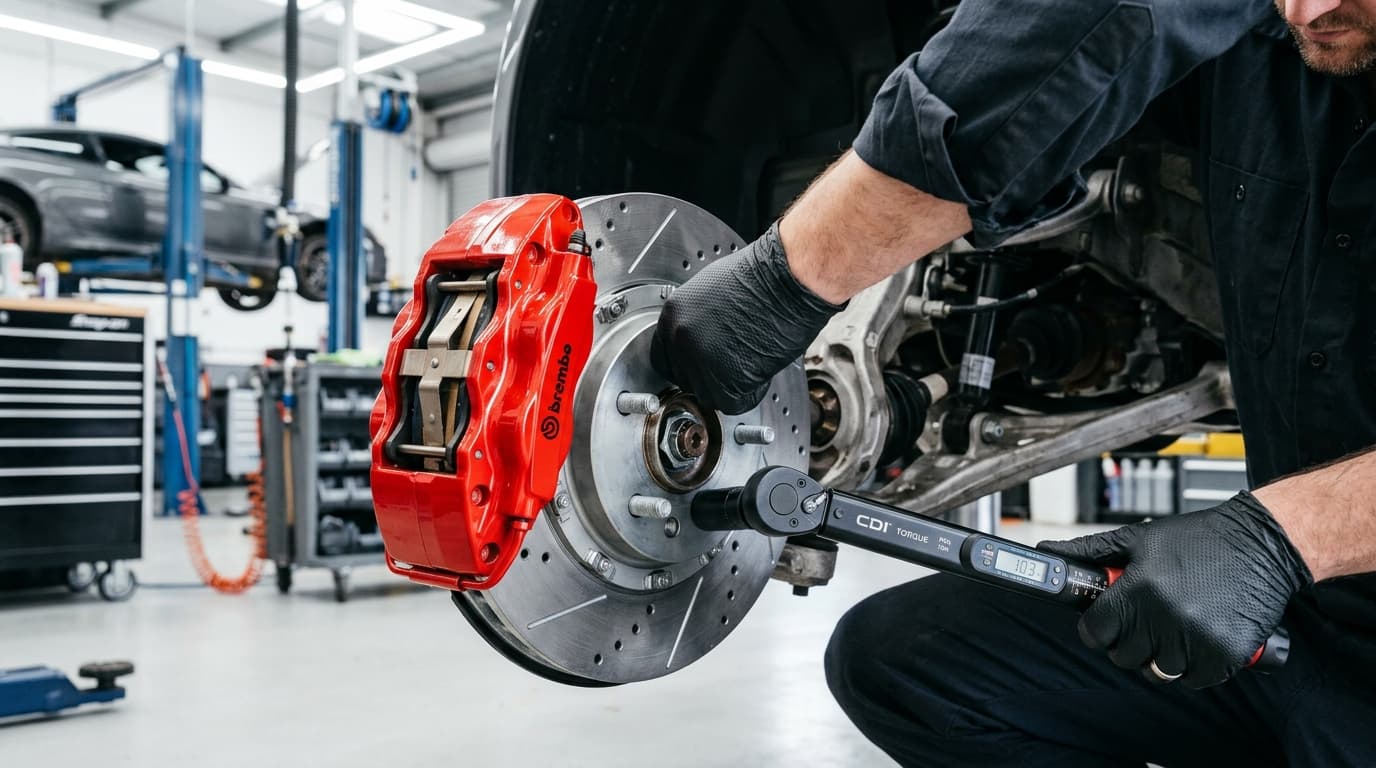
This is almost always caused by rotor thickness variation (DTV), commonly referred to as "warped rotors." Excessive heat cycles, hard emergency stops, or uneven wheel lug nut torque can cause high and low spots across the rotor disc face. As the brake pads clamp against these irregularities, hydraulic pressure pulses back through the lines.
3. Spongy, Soft, or Sinking Brake Pedal
A healthy brake pedal should feel firm and provide immediate progressive resistance. If the pedal feels soft, spongy like a wet sponge, or sinks slowly toward the floorboard when held at a red light, you may have:
- Moisture or air bubbles trapped within the hydraulic brake fluid lines
- Degraded brake fluid with a lowered boiling point
- An internal seal leak within the master cylinder
Safety Warning: A sinking brake pedal represents an active hydraulic safety hazard. Have the vehicle inspected immediately before operating at high speeds.
4. Vehicle Pulling to One Side Under Braking
If your car swerves or yanks toward the left or right when you apply the brakes, one side is generating substantially more friction than the other. Common culprits include:
- A seized caliper guide pin or frozen piston
- Contaminated brake friction material from a leaking wheel hub grease seal
- Unequal hydraulic pressure distribution from an ABS proportioning valve fault
5. Metal-on-Metal Grinding Noise
A harsh, abrasive grinding sound indicates that you have completely worn through the friction pad down to the steel backing plate. Steel is now chewing directly into steel. Every mile driven in this state damages the rotor disc beyond resurfacing and places immense thermal strain on caliper seals.
Proactive Care Checklist
- Inspect brake pad thickness at every oil service (every 5,000–7,500 miles).
- Flush brake fluid every 24 to 36 months to remove hygroscopic moisture.
- Always replace or machine rotors in axle pairs to preserve balanced stopping distances.
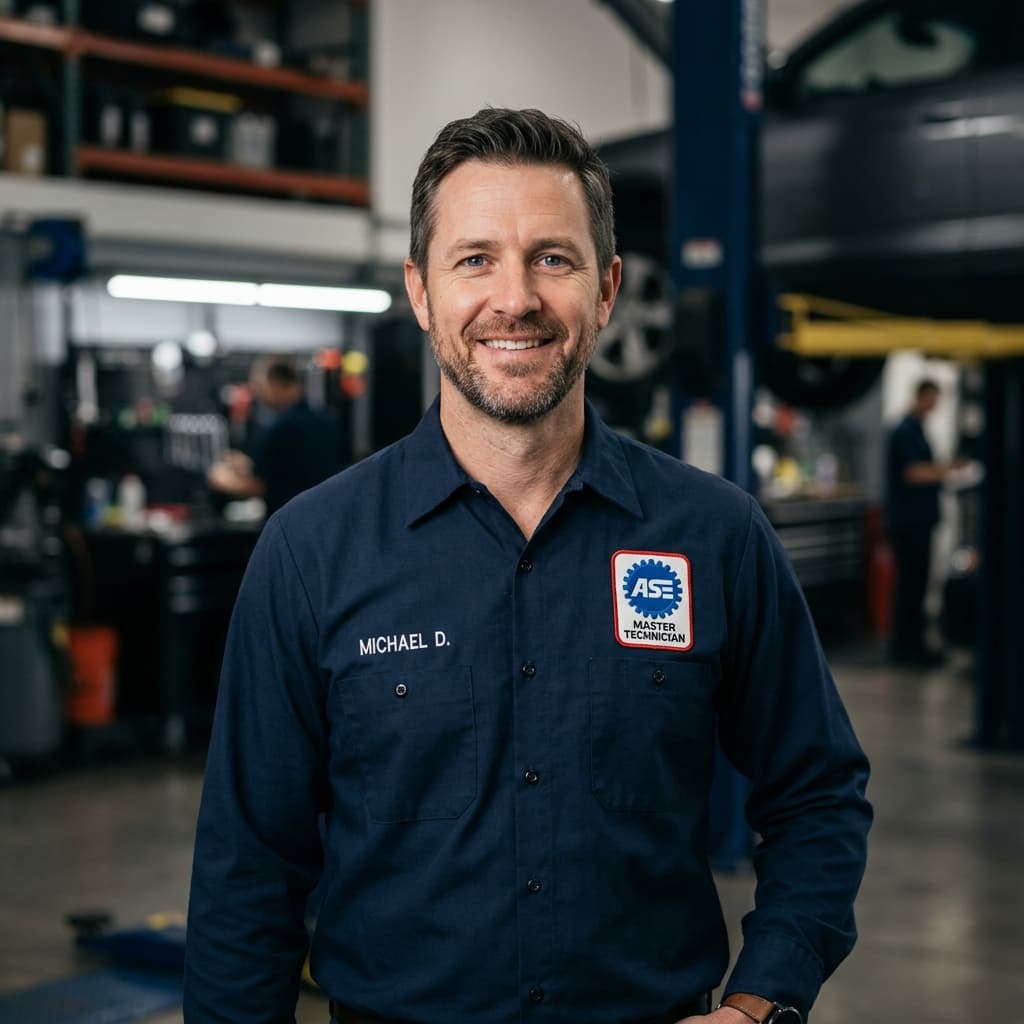
Michael Daniels
Chief ASE Master Technician
Serving the Austin automotive community with advanced diagnostics, honest advice, and master-level craftsmanship.
Concerned About Your Vehicle's Safety?
Don't wait for a breakdown. Book our 45-Point Digital Vehicle Inspection today.
Schedule An Inspection Now